Publishing and Copyrights are owned by Shannon Harris of Audio Pharmacology™ and Frequency As A Pharmacy 2025.
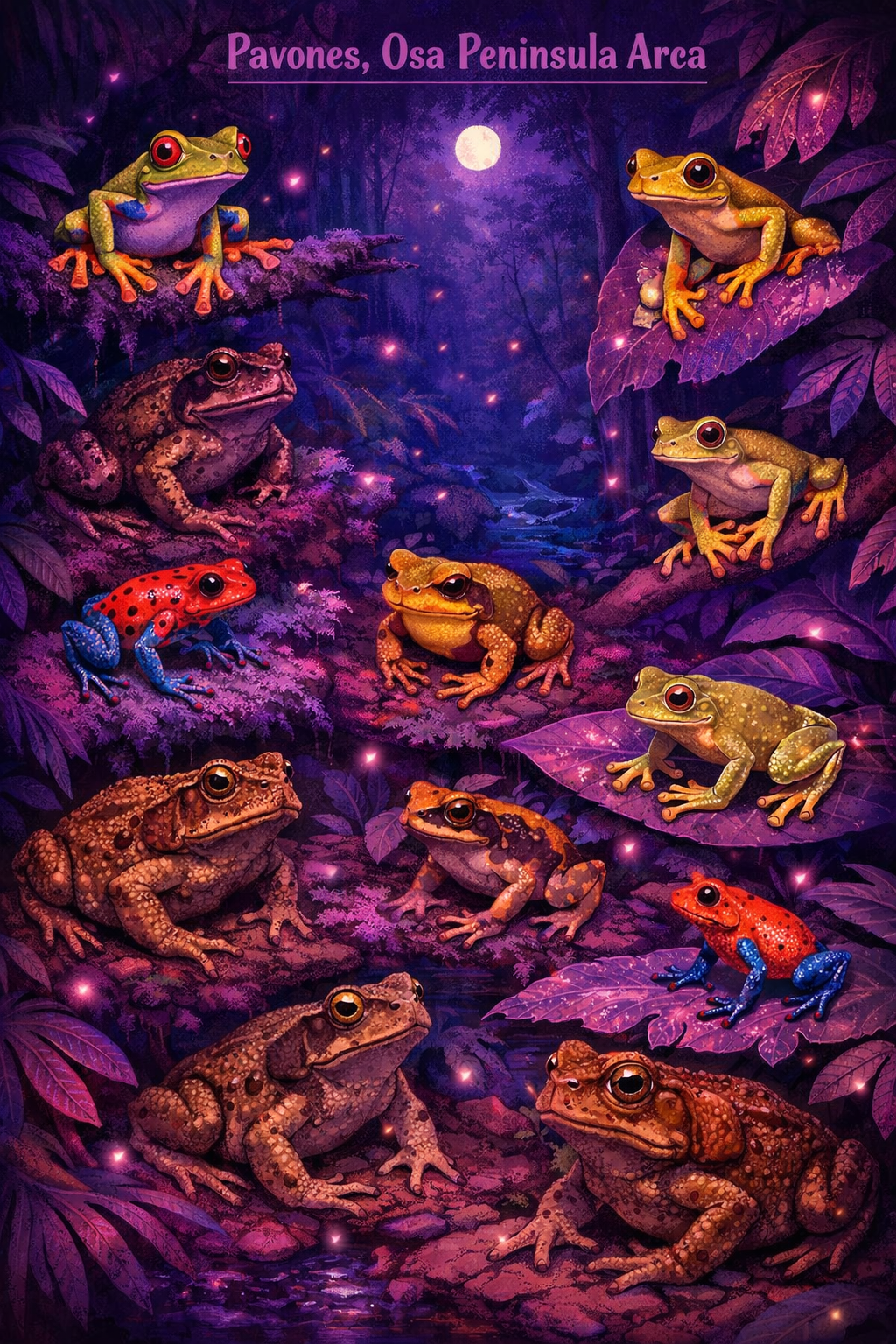
Amphibians of the Night – Costa Rica 2
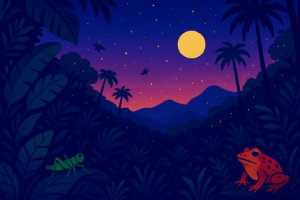
The Osa Peninsula of Costa Rica is one of the most biologically intense places on Earth, and its frog and toad diversity is a living symphony of color, sound, and survival. Home to dozens of amphibian species, including vibrant poison dart frogs, red-eyed tree frogs, glass frogs, and elusive rainforest toads, Osa’s humid jungles and pristine wetlands provide ideal conditions for amphibian life to flourish. Each species plays a vital role in the ecosystem—controlling insect populations, serving as indicators of environmental health, and contributing to the delicate balance of the rainforest. Their calls, rising with the dusk and echoing through the canopy after rain, create a powerful acoustic landscape unique to this region.
Beyond their ecological importance, the sounds of frogs and toads offer profound benefits for human well-being. Research shows that listening to natural soundscapes—especially rhythmic amphibian calls—can reduce stress, lower cortisol levels, and promote relaxation. The steady croaks and trills activate the parasympathetic nervous system, helping the body shift out of “fight or flight” and into a state of calm. These sounds can also improve focus, enhance meditation, support better sleep, and ease anxiety by reconnecting listeners to natural rhythms.
In Osa, frog and toad calls are more than background noise—they are a nightly chorus signaling a healthy rainforest. Listening to them is both a sensory experience and a gentle form of natural therapy, reminding us of our deep connection to wild places and the healing power of intact ecosystems.








Comment