Brain Entrainment Playlist
Neuroscience based therapies
Brain entrainment and its benefits
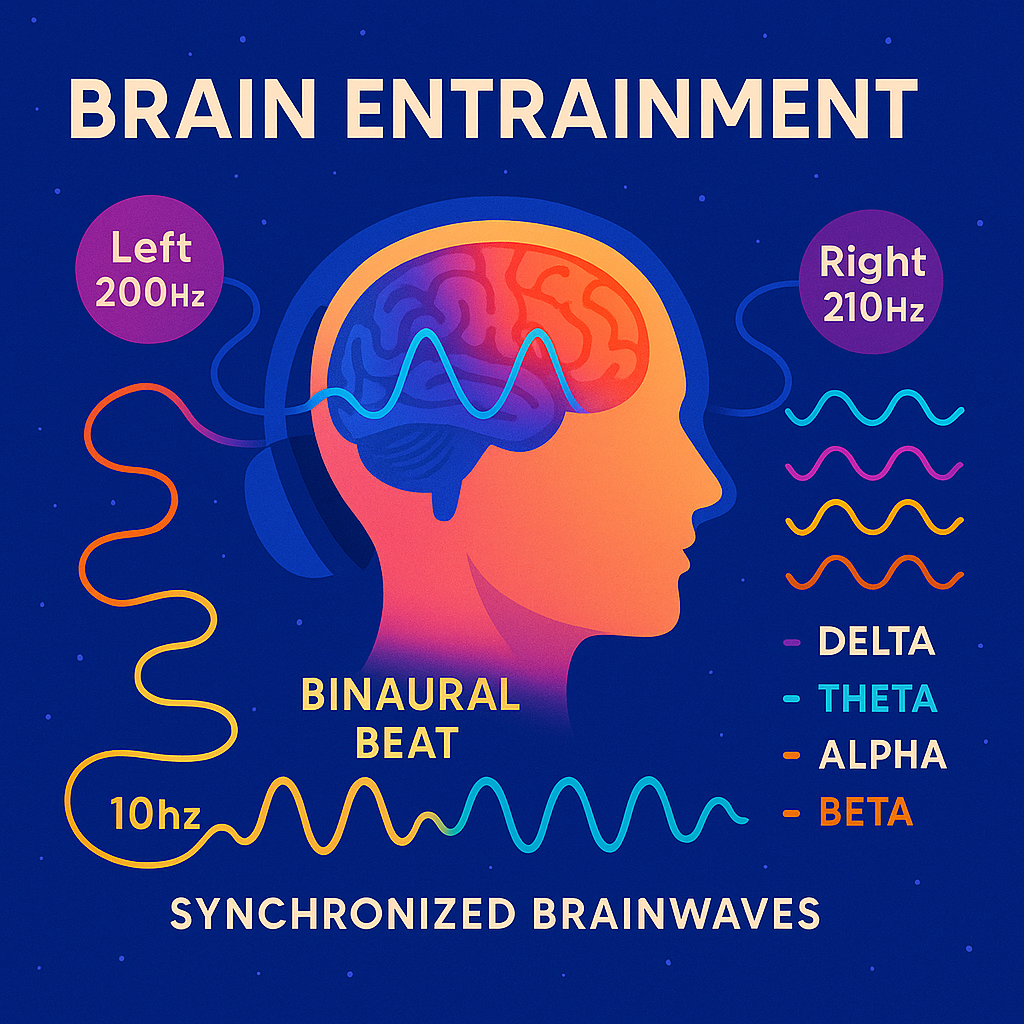
Brain entrainment, also known as brainwave entrainment or neural entrainment, is a technique that uses external stimuli, like sound or light, to influence and synchronize brainwave frequencies. The goal is to shift your brain’s electrical activity into a desired pattern, potentially inducing various mental states.
Here’s a breakdown of how it works and its potential benefits:
How brain entrainment works
- Frequency Following Response (FFR): The core principle is based on the brain’s natural tendency to align its electrical rhythms with the frequency of external stimuli. This is described as a type of neural oscillation.
- Types of brainwaves: Different states of consciousness are associated with different brainwave frequencies:
- Delta (0.5-4 Hz): Deep sleep, unconsciousness.
- Theta (4-8 Hz): Drowsiness, meditation, creativity.
- Alpha (8-12 Hz): Relaxation, closed eyes.
- Beta (13-30 Hz): Concentration, problem-solving.
- Gamma (30-100 Hz): High-level cognitive processing.
- Stimuli and synchronization: Rhythmic stimuli are used to encourage the brain’s electrical activity to synchronize with the stimulus frequency, aiming for a shift in mental state. Examples include:
- Binaural beats: Two slightly different frequencies create a perceived “beating” tone.
- Isochronic tones: A single tone turns on and off at regular intervals.
- Visual entrainment: Flashing lights or patterns at a specific frequency.
Potential benefits
- Stress and anxiety reduction: Techniques like using alpha or theta frequency binaural beats can promote calm and tranquility, potentially reducing cortisol levels, heart rate, and blood pressure.
- Enhanced cognitive abilities: Brain entrainment may positively influence attention, memory, and problem-solving, with gamma frequency entrainment linked to improved focus.
- Improved sleep: Delta frequency entrainment, associated with deep sleep, may help individuals with sleep issues by promoting deep relaxation and restful sleep.
- Enhanced meditation: Brain entrainment can facilitate meditation by inducing relaxation and reducing mind-wandering, helping to quiet the mind and increase theta brainwaves.
- Mood improvement: Brainwave entrainment and meditation have been linked to increased production of mood-regulating neurotransmitters like dopamine and serotonin.
- Peak performance in sports: It may help athletes enhance focus, reaction times, and mental resilience.
Important considerations
- Effectiveness: Research on brain entrainment is ongoing, and results can vary.
- Safety: Generally considered safe, but individuals with a history of seizures or light sensitivity should be cautious or consult a healthcare professional.
Brain entrainment offers a way to explore and potentially optimize the mind through various accessible techniques.












Comment